
You are about to swap tokens on a familiar DeFi site when the wallet presents a transaction that looks almost meaningless: a contract address, a gas estimate, and a request to approve spending. The website says the action is routine. Your wallet says very little. In that moment, the main security problem is not merely choosing the right browser extension. It is understanding what you are authorizing before an irreversible blockchain transaction is signed.
Rabby Wallet approaches that problem differently from a basic browser wallet. Its central idea is to place more transaction context in front of the user, including a simulation of the expected outcome where the relevant network and application data allow it. That does not make DeFi risk-free, and it does not replace careful verification. It does, however, create a useful comparison between two wallet philosophies: signing first and interpreting later, or inspecting the likely result before signing.
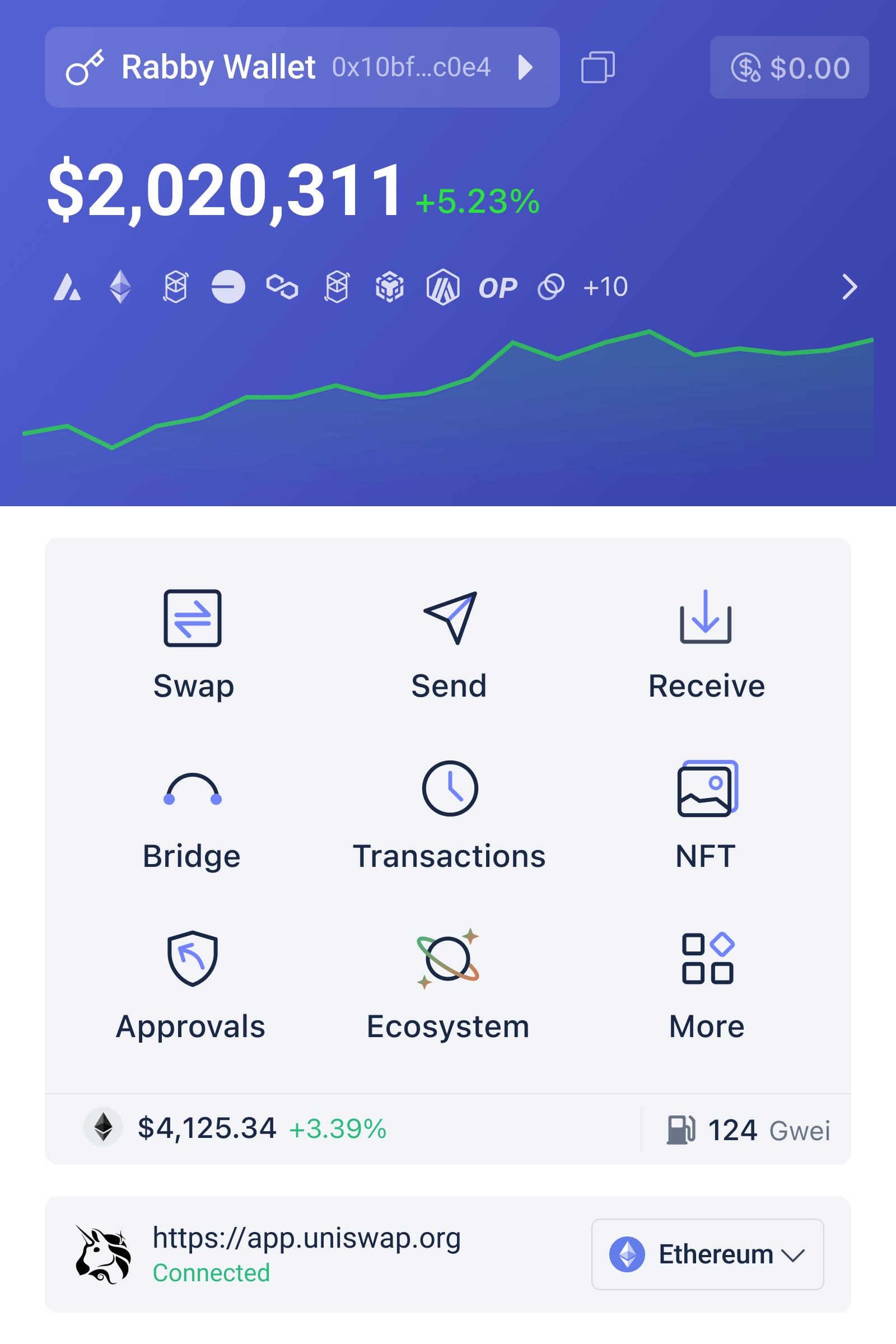
What a Rabby Extension Download Actually Changes
A browser wallet extension is an interface between a web browser, blockchain networks, and a user-controlled key. It can display account balances, connect to decentralized applications, construct transactions, and request signatures. The extension does not itself turn a risky application into a safe one. Instead, it influences how much information is visible during the decision process.
For a US-based DeFi user, the installation stage should therefore be treated as a supply-chain and account-security decision, not a routine software download. Use the project’s legitimate distribution channel, check that the browser is obtaining the expected extension, and avoid search advertisements, unsolicited direct messages, or “support” pages that request a seed phrase. A genuine wallet provider will not need your recovery phrase in order to activate an extension.
Readers who are evaluating the installation path can review the rabby extension download resource, but the same rule applies to any wallet: verify the source independently before installing. A wallet extension may manage access to valuable accounts, yet the recovery phrase remains the more fundamental credential. If that phrase is exposed, changing a browser extension or password cannot restore control.
Rabby Versus a Basic Browser Wallet
The most useful comparison is not “which wallet is best?” but “which decision does each wallet help the user make?” A basic wallet often excels at simplicity. It may present a compact approval prompt and allow the user to confirm quickly across many applications. That can be convenient for experienced users who already understand the contract, token, amount, and expected state change.
Rabby’s design places greater emphasis on interpretation. Before a transaction is signed, a simulation can attempt to show what the action is expected to do: which assets may leave the account, which assets may arrive, whether an approval grants spending permission, and whether the transaction appears likely to fail. This is particularly valuable when the raw transaction data is difficult for a non-specialist to read.
The trade-off is cognitive and operational. More warnings and more detail can interrupt a fast workflow. A user may learn to click through alerts simply because the interface presents them frequently. Conversely, an overly minimal wallet can encourage blind signing. Neither design solves the human tendency to approve a familiar-looking prompt under time pressure. The practical advantage comes from using the extra information deliberately.
A hardware wallet represents another alternative rather than a direct substitute. It can keep key operations isolated from the browser and require physical confirmation, reducing some remote attack paths. But a hardware device may still display transaction information in a limited form, and it generally cannot determine whether a DeFi strategy is economically sensible or whether a website is socially engineered. Rabby and a hardware wallet can be complementary: one improves transaction interpretation, while the other can strengthen key custody.
How Transaction Simulation Works in Practice
Transaction simulation is best understood as a “what would happen if this call were executed?” test. The wallet or a supporting service evaluates the proposed transaction against a representation of the current blockchain state. It may model token transfers, contract calls, approvals, fees, and expected failures. The result is an estimate of the state changes that would follow if the transaction were actually submitted and included.
This distinction matters because a transaction signature is not an expression of general trust. It is authorization for specific encoded instructions. A token approval, for example, can give a contract permission to move tokens later, potentially beyond the immediate swap. A simulation that separates the immediate transfer from the permission being granted can expose a risk that a generic “confirm” button hides.
Simulation also changes the user’s mental model. Instead of asking only, “Does this website look legitimate?” the user can ask, “Does the expected state change match the action I intended?” That is a stronger question. A polished phishing site may resemble a genuine application, but it may request a transaction that sends assets away or grants an excessive allowance. If the simulated outcome conflicts with the stated purpose, the correct action is to stop.
Still, simulation is an aid, not an oracle. It depends on the accuracy and timeliness of the underlying blockchain state, the ability to interpret the contract, and the assumptions made about external calls. A transaction can be simulated successfully and later produce a different result if the state changes before execution. Prices may move, liquidity may disappear, a block may reorder activity, or a contract may depend on conditions not captured in the preview.
There is also a boundary between technical execution risk and economic risk. A simulation may indicate that a swap will execute, while saying little about slippage, price impact, impermanent loss, token tax behavior, governance risk, or the long-term trustworthiness of a protocol. “The transaction works” is not equivalent to “the trade is favorable” or “the protocol is safe.” This is one of the most important misconceptions to correct.
A Practical Risk-Review Framework
Before approving a DeFi transaction, separate the review into four questions. First, identity: am I on the intended website, using the intended account, network, and contract? Second, authorization: am I transferring assets now, or granting permission for a contract to move them later? Third, outcome: do the simulated changes correspond to the action I meant to take? Fourth, exposure: what could happen if the application, token, or connected account behaves maliciously?
This framework is more reliable than treating a warning color as a universal verdict. Wallet risk signals can identify suspicious patterns or unusual behavior, but they can also be incomplete, overly broad, or unable to assess a newly deployed contract. A clean-looking review should increase confidence only within its scope. It should not become a reason to ignore the amount, allowance, recipient, or protocol being used.
For routine activity, consider using a separate wallet for experimental protocols and keeping larger holdings elsewhere. Limit token approvals where the application allows it, review existing allowances periodically, and avoid signing while distracted. If an application demands an unexpected network switch, a message signature with unclear meaning, or an unusually broad approval, pause and investigate rather than assuming the prompt is necessary.
Message signing deserves special attention. Not every dangerous action appears as a conventional token transfer. Off-chain signatures can authorize orders, listings, permissions, or other actions that are executed later. A simulation may be more informative for an on-chain transaction than for an opaque typed message. Users should read the message meaning, not just verify that the request is free of gas fees. No-fee does not mean no-risk.
Where the Comparison Leads
Rabby is most compelling for users who interact with multiple DeFi applications and want transaction context before committing a signature. A basic wallet may remain preferable for someone who values minimal prompts and already performs independent contract and allowance checks. A hardware wallet may be preferable when the highest priority is protecting the signing key from browser-level compromise. These are different layers of defense, so choosing one does not automatically eliminate the need for the others.
The likely direction of wallet security is conditional rather than guaranteed. If simulation tools become more accurate, easier to interpret, and better integrated with hardware confirmation, users may gain a clearer separation between custody and transaction analysis. If interfaces instead generate too many generic warnings, users may experience alert fatigue and revert to blind approval. The signal worth watching is not the number of warnings, but whether the wallet explains the exact state change in language a user can verify.
For now, the durable lesson is simple: transaction simulation improves the preview, not the underlying reality. It can reveal a mismatch between intention and encoded action, which is a meaningful security improvement. It cannot judge every protocol, predict every market movement, or protect a recovery phrase that has already been disclosed. The safest DeFi workflow combines verified software, controlled custody, explicit allowance management, and a deliberate comparison between what the application promises and what the wallet says the transaction will do.
Frequently Asked Questions
Is Rabby Wallet safer than every other browser wallet?
No. Its transaction-review and simulation features can provide useful context, especially for DeFi interactions, but safety depends on the entire operating process. A user can still approve a harmful transaction, install a fake extension, expose a recovery phrase, or misunderstand a protocol’s economic risks. Rabby should be viewed as one layer in a broader security model.
Can transaction simulation guarantee that a DeFi transaction is safe?
No. Simulation estimates the result under particular assumptions and blockchain conditions. It may not capture later state changes, hidden economic risks, malicious interface behavior, or every consequence of a complex contract call. Treat the preview as a consistency check: if the expected outcome does not match your intention, do not sign. If it does match, continue reviewing the application, amount, allowance, and custody context.
Should a hardware wallet still be used with a browser extension?
For users holding significant assets, a hardware wallet can add protection by keeping key operations more isolated from the browser. It does not remove the need to inspect transactions, because a hardware device cannot automatically determine whether a protocol or trade is economically trustworthy. The combination of stronger custody and clearer transaction review can address different parts of the same risk.